| Dimensioni (CM) L X P X A | L 51 H 138 |
|---|---|
| Periodo di Produzione | 1900 – 1920 |
| Materiale | Vetro antico, Vetro satinato |
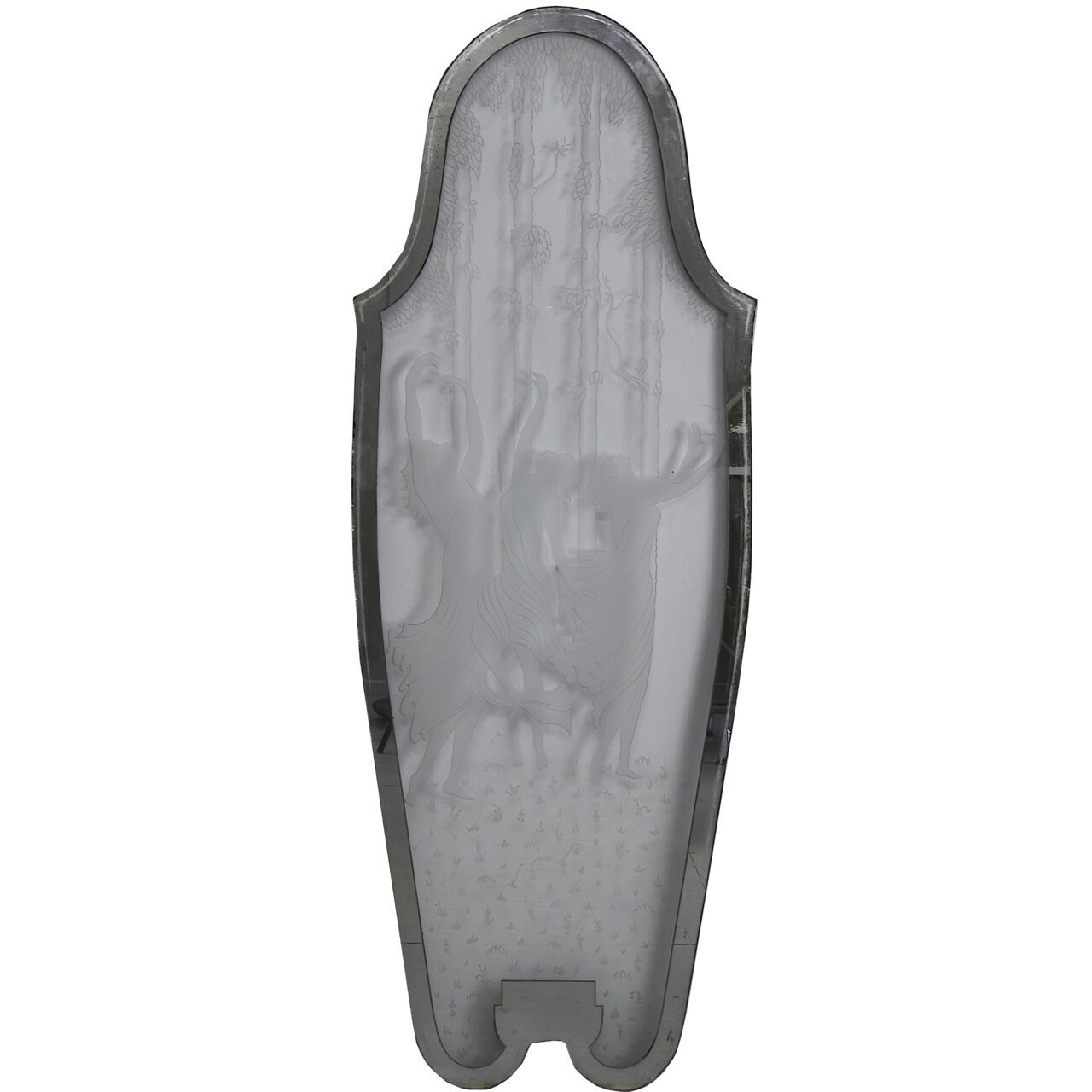
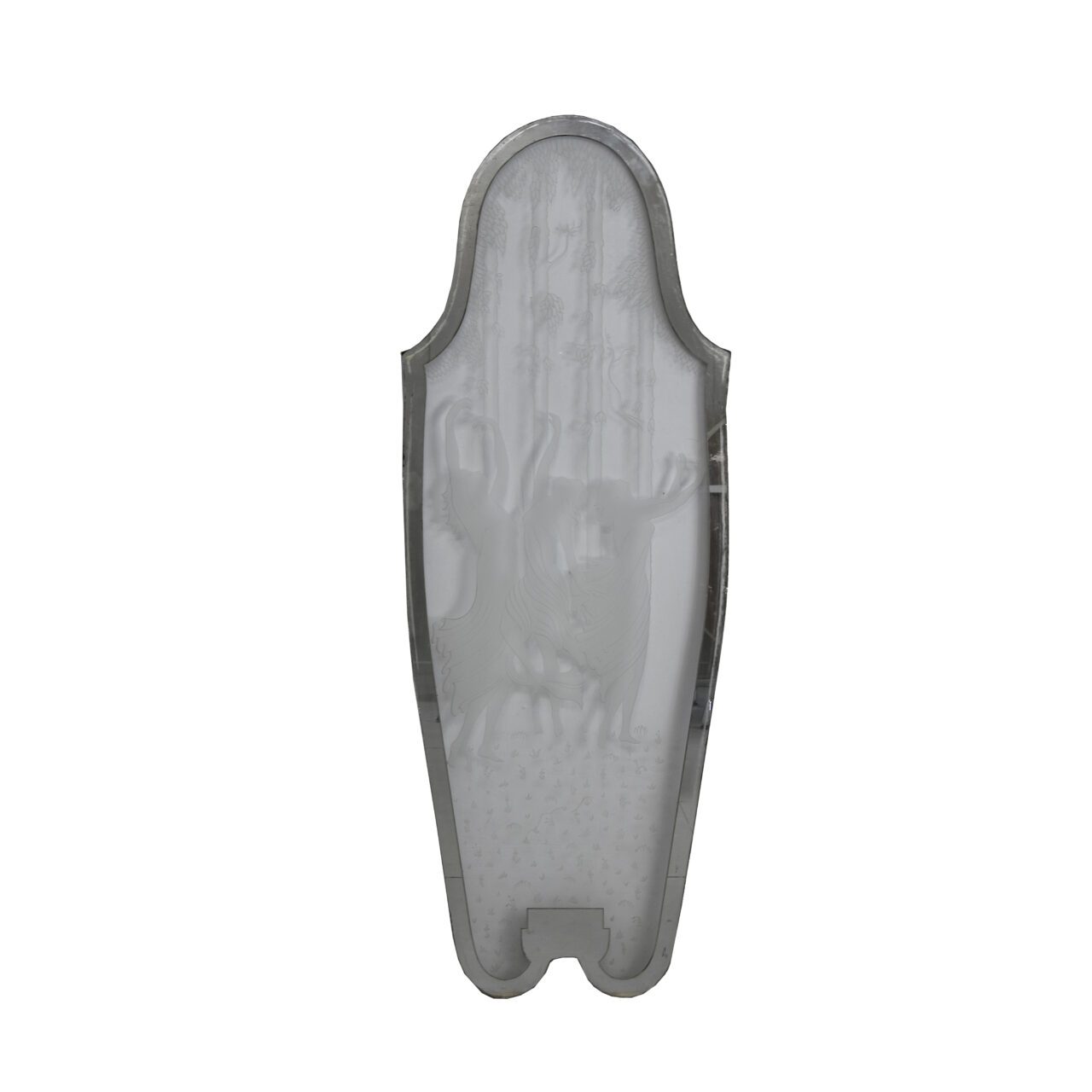
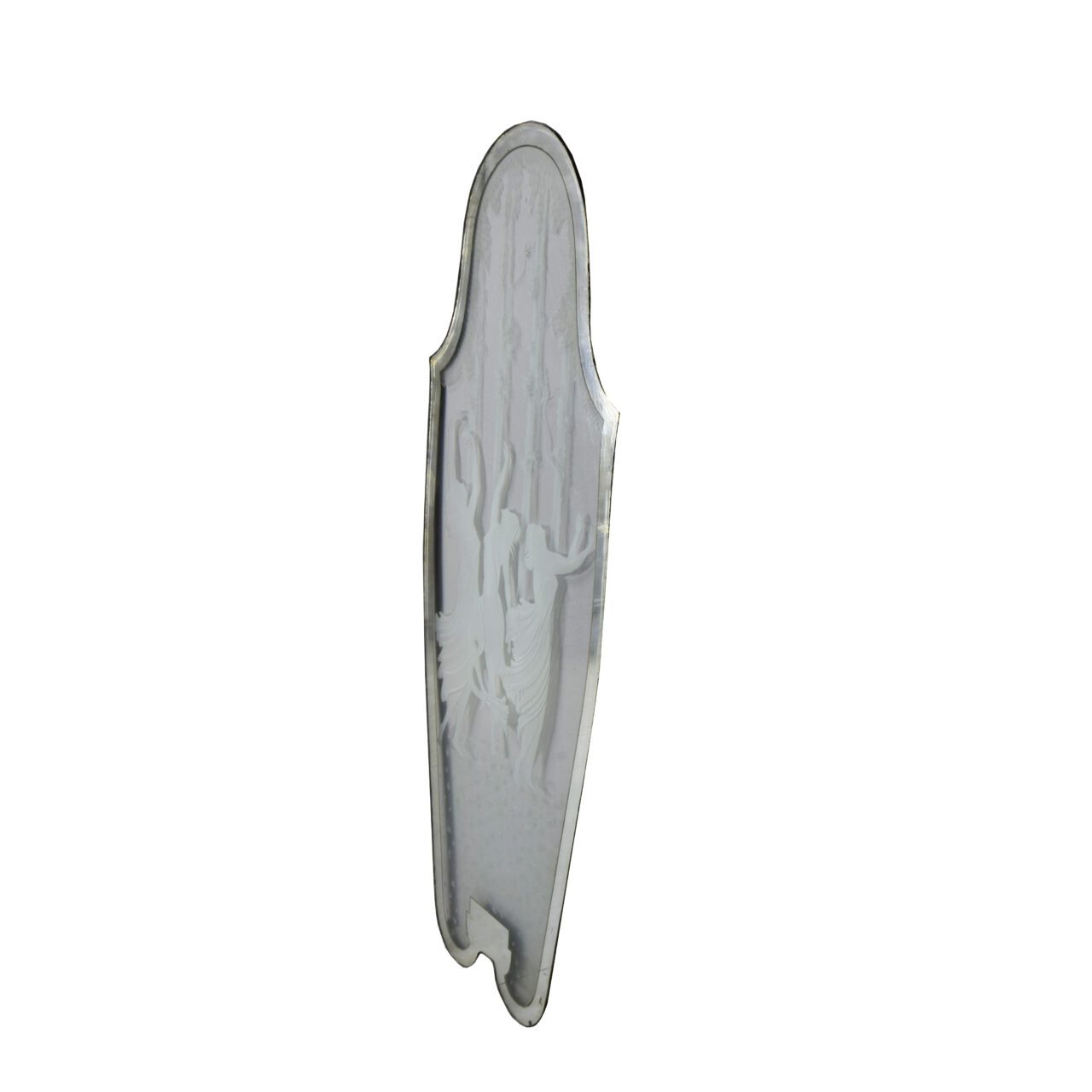
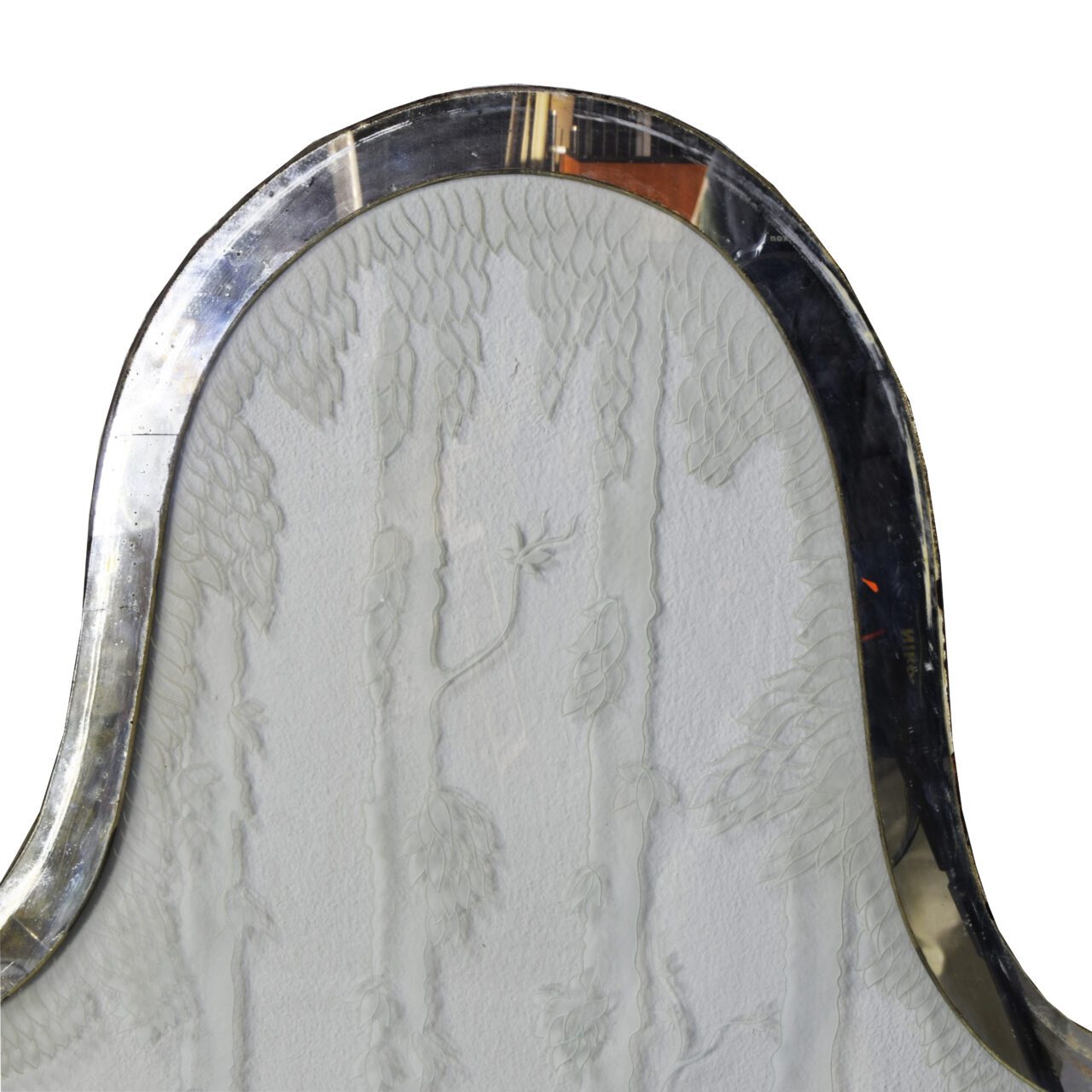
Art Déco Mirror Panel Frosted Etched Glass with Dancing Figures and Mirrored Frame, Italy, 1930s–1940s
€1.000,00
This shaped mirror panel belongs to the Italian decorative arts production of the interwar decades, a period in which worked glass became one of the most expressive languages of the Art Déco interior. The subject — female figures in dance, set within a lush natural environment of reeds and hanging foliage — is one of the defining iconographic themes of the style: the dancing woman, frequently depicted in flowing drapery and caught mid-movement, appeared across every medium of the period, from René Lalique’s pressed glass to Émile Gallé’s cameo panels and the acid-etched architectural glass produced by Italian workshops in the 1930s. The choice of this subject for a large-format mirror panel is consistent with the production of high-end Milanese glass manufacturers of the period, including Fontana Arte, whose artistic director Pietro Chiesa systematically explored the intersection of figural decoration and pure glass surfaces between 1933 and his death in 1948.
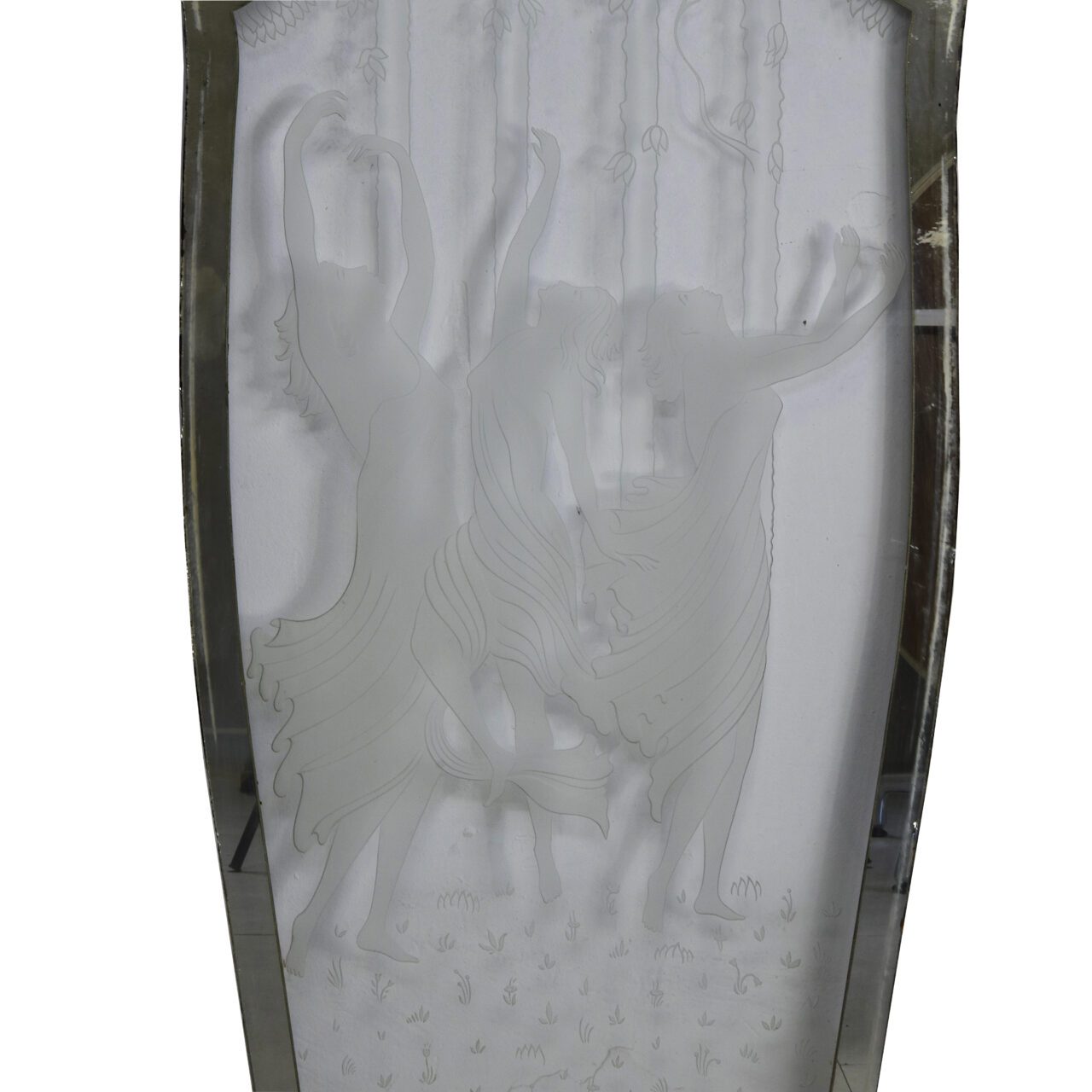
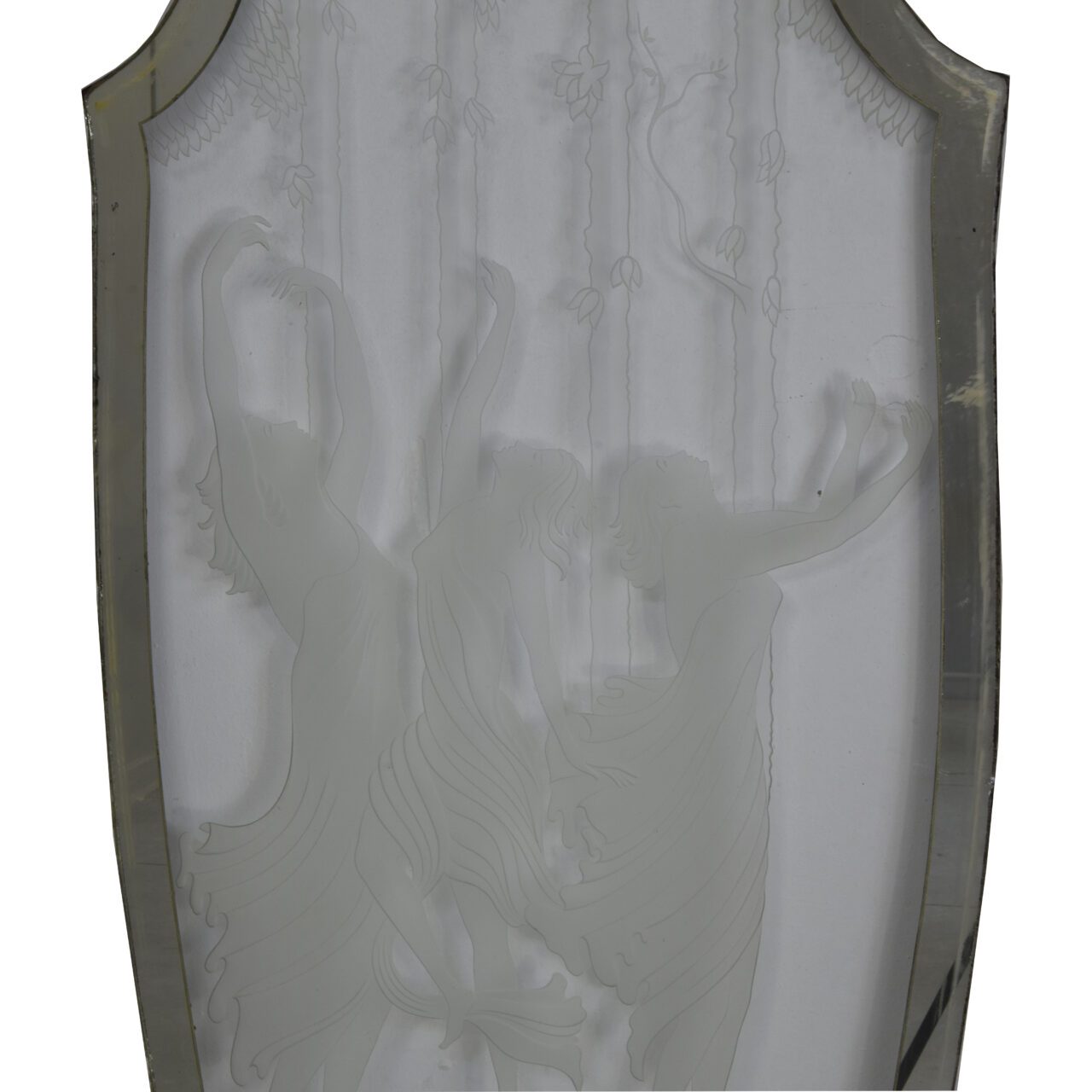
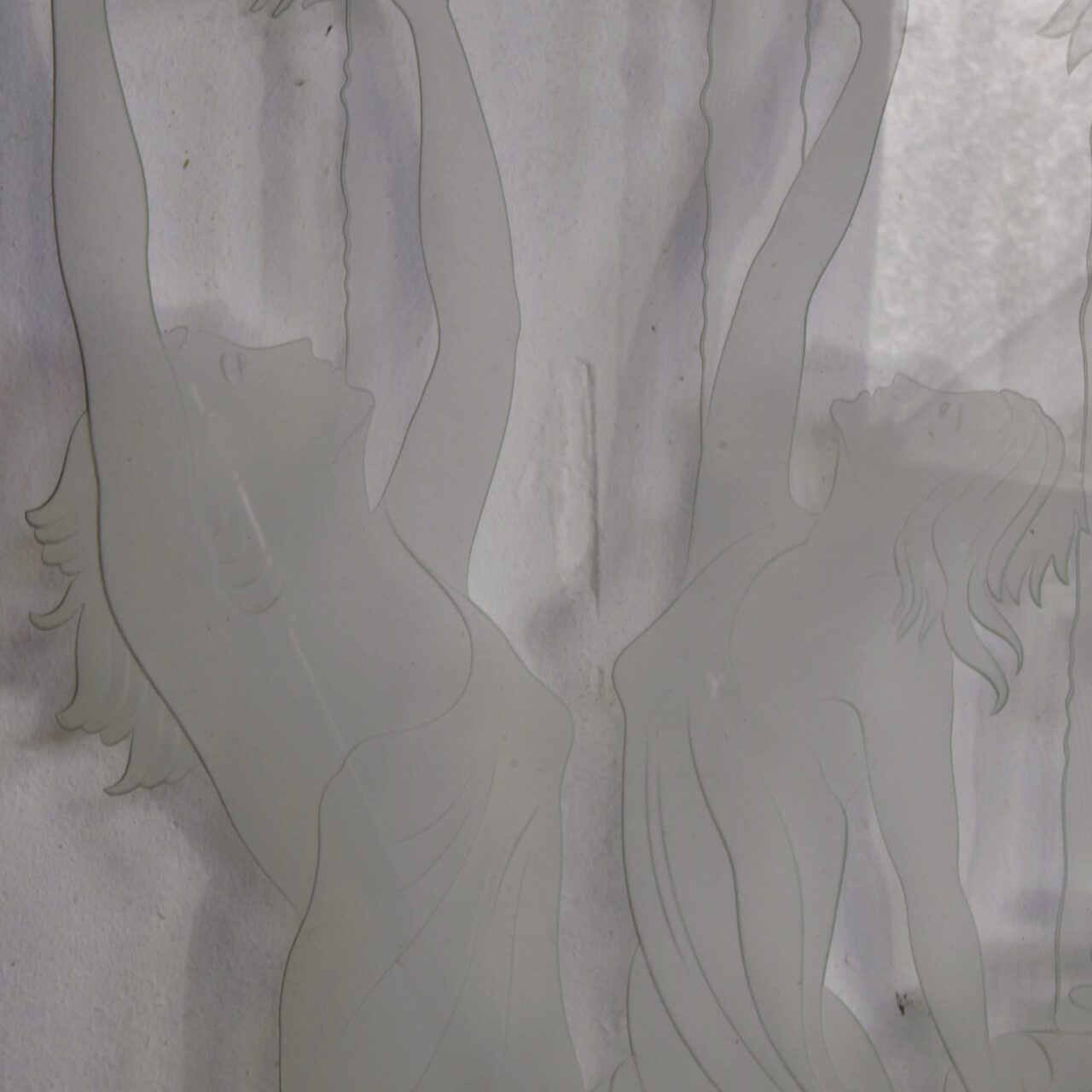
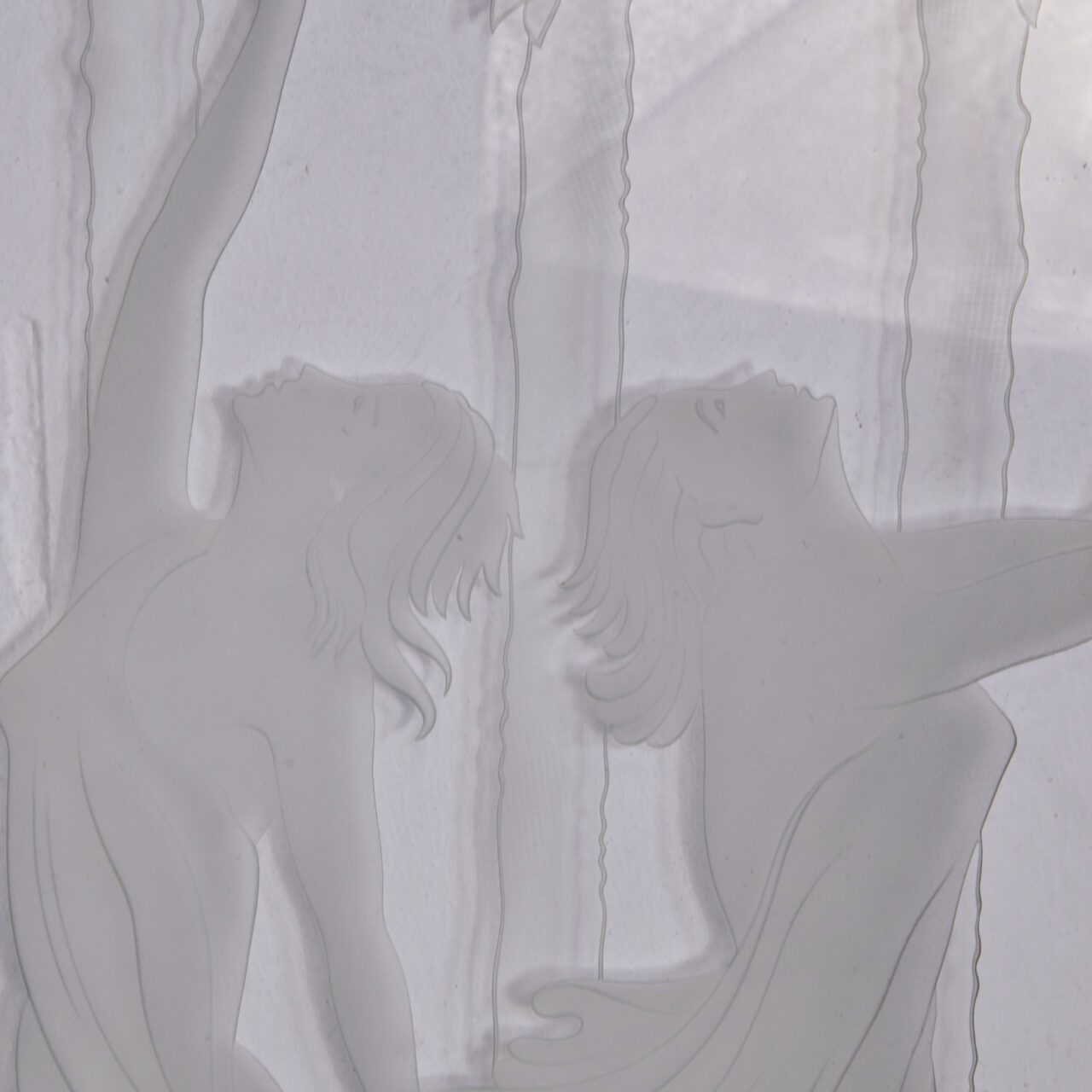
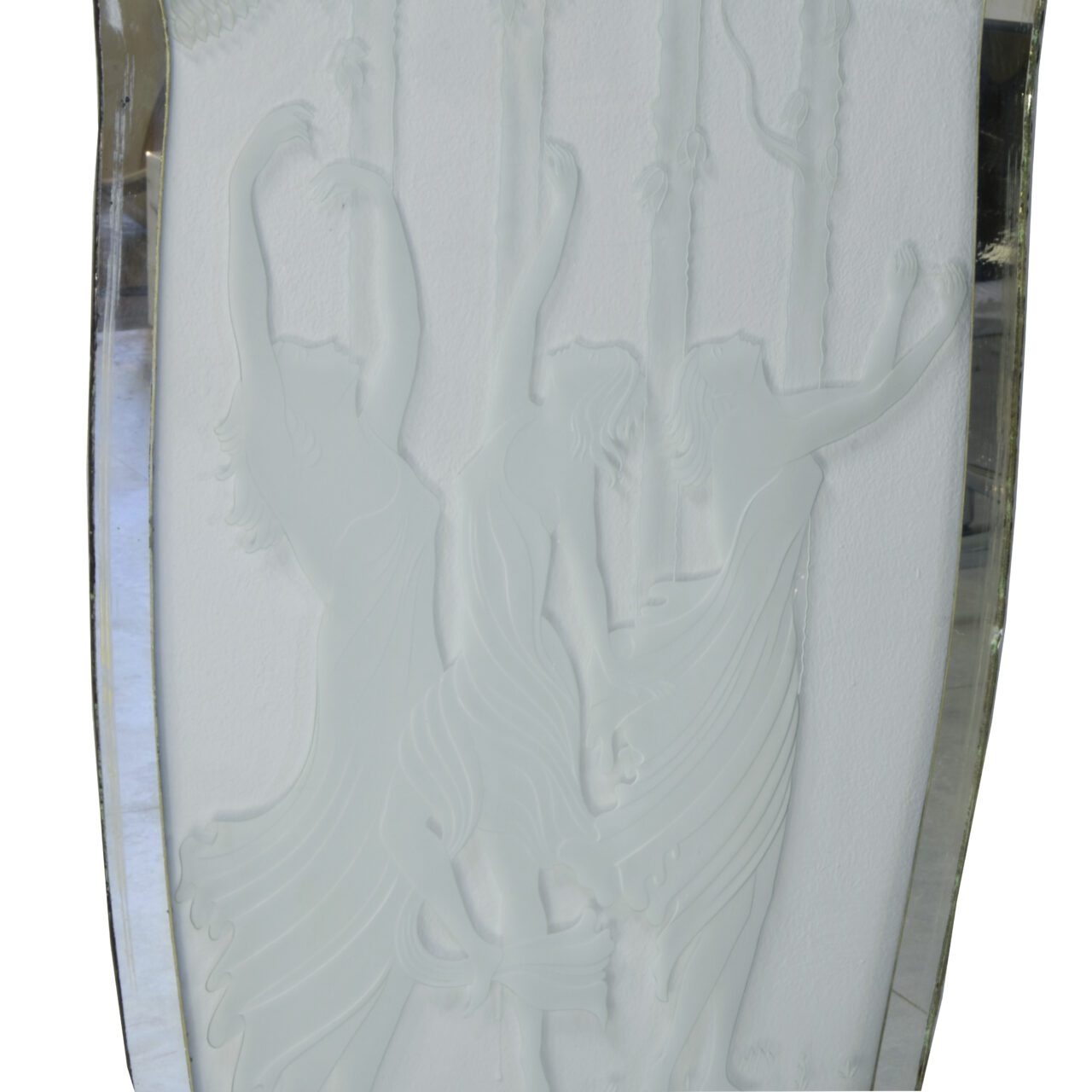
The panel is executed in frosted glass worked by acid-etching or sand-blasting, a technique that builds relief and tonal gradation directly into the surface of the plate without breaking it. The central composition depicts two female figures in dance — rendered in the rounded, volumetric style characteristic of Italian Art Déco figuration — surrounded by tall vertical reeds, hanging vines, and ground-level vegetation treated with fine incised line-work. The bodies of the figures are modelled with particular care, with drapery suggesting movement. The shaped silhouette — rounded arch at the crown, waisted at the sides with concave notches at the base — is architecturally refined and typical of Italian mirror design from the late 1930s and early 1940s. The mirrored glass frame, lightly smoked, follows the same profile and acts as a formal surround, distinguishing the frosted pictorial field from the reflective border. The overall tonality is a cool grey-silver.
Questo pannello specchiera appartiene alla produzione decorativa italiana dei decenni tra le due guerre, un periodo in cui il vetro lavorato divenne uno dei linguaggi più espressivi dell’interno Art Déco. Il soggetto — figure femminili danzanti in un ambiente naturale di canne e fogliame pendente — è uno dei temi iconografici fondanti dello stile: la donna in movimento, frequentemente rappresentata in vesti fluenti e colta nel gesto della danza, comparve in ogni medium del periodo, dalla vetreria pressa di René Lalique ai pannelli in vetro cameo di Émile Gallé, fino al vetro architettonico inciso ad acido delle manifatture italiane degli anni Trenta. La scelta di questo soggetto per un pannello specchiera di grande formato è coerente con la produzione delle vetrerie milanesi di alta gamma del periodo, tra cui Fontana Arte, il cui direttore artistico Pietro Chiesa esplorò sistematicamente l’intersezione tra decorazione figurativa e superfici pure in vetro tra il 1933 e la sua morte nel 1948.
Il pannello è realizzato in vetro satinato lavorato per incisione ad acido o a sabbiatura, tecnica che costruisce rilievo e gradazione tonale direttamente nella superficie della lastra senza perforarla. La composizione centrale raffigura due figure femminili danzanti — rese nel modellato rotondo e volumetrico caratteristico della figurazione Art Déco italiana — circondate da alte canne verticali, rami pendenti e vegetazione bassa trattata con fine incisione lineare. I corpi delle figure sono modellati con cura particolare, con panneggi che suggeriscono il movimento. La sagoma del pannello — arco arrotondato in sommità, vita stretta sui lati con rientranze concave alla base — è architettonicamente raffinata e tipica del disegno italiano dello specchio tra la fine degli anni Trenta e i primi anni Quaranta. La cornice in vetro specchiato, leggermente fumé, segue lo stesso profilo e funge da bordo formale, distinguendo il campo pittorico satinato dal margine riflettente. La tonalità complessiva è un grigio-argento freddo.
1 disponibili
Informazioni aggiuntive